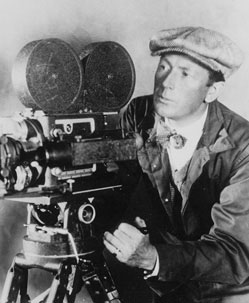
 Friedrich Wilhelm Murnau(1888 – 1931) was one of the most influential German film directors of the silent era, and a prominent figure in the expressionist movement in German cinema during the 1920s. Murnau was greatly influenced by Schopenhauer, Nietzsche, Shakespeare and Ibsen plays he had seen at the age of 12, and became a friend of director Max Reinhardt.
Arguably Murnau's best known work is his 1922 film "Nosferatu", an adaptation of Bram Stoker's "Dracula". The film was considered a masterpiece of Expressionist artwork. He was also known for his work with the 1924 film "The Last Laugh" and his interpretation of Goethe's "Faust" (1926). He later immigrated to Hollywood in 1926, where he joined the Fox Studio and made three films, including "Sunrise" (1927), "4 Devils" (1928) and "City Girl" (1930).
Of the 21 films Murnau directed, 8 have been completely lost, leaving 12 surviving in their entirety.
During World War I he served as a company commander at the eastern front and was in the German air force, surviving several crashes without any severe injuries. After World War I ended, Murnau returned to Germany where he soon established his own film studio with actor Conrad Veidt. His first feature-length film, "The Boy in Blue", a drama inspired by the famous Thomas Gainsborough painting, was released in 1919. He explored the popular theme of dual personalities, much like Robert Louis Stevenson's Dr. Jekyll and Mr. Hyde, in 1920's "Der Janus-Kopf" starring Veidt and Bela Lugosi.
Murnau's most famous film is "Nosferatu", a 1922 adaptation of Bram Stoker's "Dracula" for which Stoker's widow sued for copyright infringement. Murnau lost the lawsuit and all prints of the film were ordered to be destroyed, but bootleg prints survived. The vampire, played by German stage actor Max Schreck, resembled a rat which was known to carry the plague. The origins of the word are from Stoker's novel, where it is used by the Romanian townsfolk to refer to Count Dracula and presumably, other undead. Nearly as important as Nosferatu in Murnau's filmography was "The Last Laugh" (1924), written by Carl Mayer and starring Emil Jannings. The film introduced the subjective point of view camera, where the camera "sees" from the eyes of a character and uses visual style to convey a character's psychological state. It also anticipated the cinéma vérité movement in its subject matter. The film also used the "unchained camera technique", a mix of tracking shots, pans, tilts, and dolly moves. Murnau's last German film was the big budget "Faust" (1926) with Gösta Ekman as the title character, Emil Jannings as Mephisto and Camilla Horn as Gretchen. Murnau's film draws on older traditions of the legendary tale of Faust as well as on Goethe's classic version. The film is well known for a sequence in which the giant, winged figure of Mephisto hovers over a town sowing the seeds of plague.
Murnau immigrated to Hollywood in 1926, where he joined the Fox Studio and made "Sunrise: A Song of Two Humans" (1927), a movie often cited by film scholars as one of the greatest films of all time. Released in the Fox Movietone sound-on-film system (music and sound effects only), Sunrise was not a financial success, but received several Oscars at the very first Academy Awards ceremony in 1929. In winning the Academy Award for Unique and Artistic Production it shared what is now the Best Picture award with the movie Wings. Murnau's next two films, the (now lost) "4 Devils" (1928) and "City Girl" (1930), were modified to adapt to the new era of sound film and were not well received. Their poor receptions disillusioned Murnau, and he quit Fox to journey for a while in the South Pacific.
Together with documentary film pioneer Robert J. Flaherty, Murnau travelled to Bora Bora to make the film Tabu in 1931. Flaherty left after artistic disputes with Murnau who had to finish the movie on his own. The movie was censored in the United States for images of bare-breasted Polynesian women. The film was originally shot by cinematographer Floyd Crosby as half-talkie, half-silent, before being fully restored as a silent film — Murnau's preferred medium.
A week prior to the opening of the film "Tabu", Murnau drove up the coast from Los Angeles, California in a hired Rolls Royce. The young driver, a 14-year-old Philippine servant, crashed the car against an electric pole. Murnau hit his head and died in a hospital the next day, in nearby Santa Barbara, before the premiere of his last film. Murnau was entombed in Southwest Cemetery in Stahnsdorf near Berlin. Only 11 people attended the funeral. Among them were Robert J. Flaherty, Emil Jannings, Greta Garbo and Fritz Lang, who delivered the eulogy. Garbo also commissioned a death mask of Murnau, which she kept on her desk during her years in Hollywood.
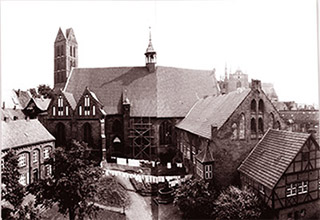
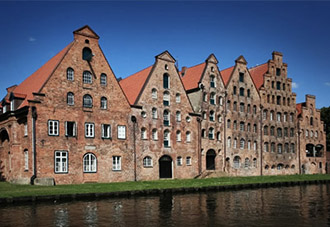 In Lübeck, the abandoned Salzspeicher served as Nosferatu's new Wisborg house, the one of the churchyard from Aegidienkirche served as Hutters and down the Depenau coffin bearers bore coffins. Many walks of Lübeck took place in the hunt of Knock who ordered Hutter in the Yard of Füchting to meet the earl.
 For cost reasons, cameraman Fritz Arno Wagner only had one camera available, and therefore there was only one original negative. Director F.W. Murnau prepared carefully; there were sketches that were to correspond exactly to each filmed scene, and he used a metronome to control the pace of the acting. He followed Galeen's screenplay carefully, following handwritten instructions on camera positioning, lighting, and related matters.
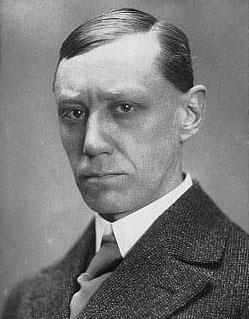 Max Schreck Max Schreck was born in Berlin-Friedenau, on 6 September 1879. Six years later his father bought a house in the independent rural community of Friedenau, then part of the district of Teltow. His father saw Schreck's ever-growing enthusiasm for theater and did not approve. His mother provided the boy with money, which he used to secretly take acting lessons. Only after the death of his father did he attend drama school.
 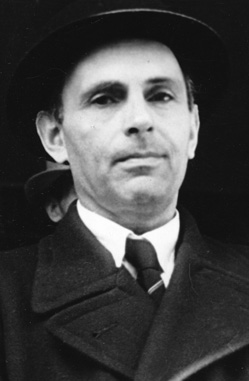 Gustav von Wangenheimwas born 1895. Both of his parents were actors; his father appeared in over 200 films between 1910 and 1960.
Wangenheim made his screen debut in 1914 in "Passionels Tagebuch" and went on to star in many silent features. Among his works were Fritz Lang's early science fiction film "Frau im Mond", where he portrayed Windegger, and Karl Heinz Martin's "Das Haus zum Mond". In 1921, Wangenheim was cast in what would prove to be his most enduring role, that of Thomas Hutter in F. W. Murnau's "Nosferatu".
Gustav von Wangenheimwas born 1895. Both of his parents were actors; his father appeared in over 200 films between 1910 and 1960.
Wangenheim made his screen debut in 1914 in "Passionels Tagebuch" and went on to star in many silent features. Among his works were Fritz Lang's early science fiction film "Frau im Mond", where he portrayed Windegger, and Karl Heinz Martin's "Das Haus zum Mond". In 1921, Wangenheim was cast in what would prove to be his most enduring role, that of Thomas Hutter in F. W. Murnau's "Nosferatu".
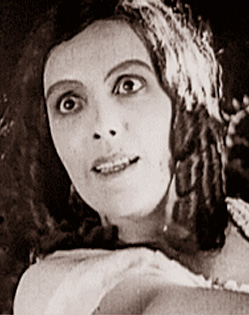 Greta Schröder(1892 – 1967) was a German actress. She is best known for the role of Thomas Hutter's wife and victim to Count Orlok in the 1922 silent film "Nosferatu". In the fictionalized 2000 film, "Shadow of the Vampire", she is portrayed as having been a famous actress during the making of "Nosferatu", but in fact she was little known.